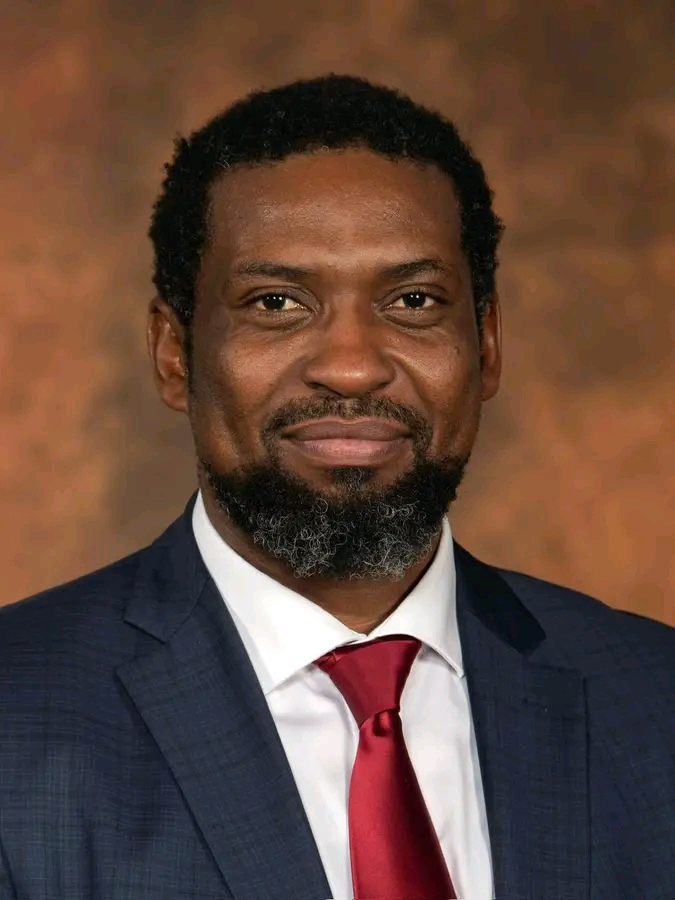
The Minister of Higher Education and Training, Mr Buti Manamela, today briefed the Portfolio Committee on Higher Education and Training on the employment of foreign academics across the Post-School Education and Training (PSET) sector.
This follows a request from the committee for disaggregated data on foreign nationals in higher education.
In his remarks, the Minister cautioned against a debate that has become clouded by vague categories and misinformation, while reaffirming that the law governing the employment of foreign nationals is not negotiable. “There are legitimate concerns in this conversation, and we do not pretend otherwise.
South Africans are entitled to expect that public institutions prioritise them for employment, that everyone who teaches does so lawfully, and that transformation is not quietly deferred.
These are not xenophobic concerns, but we must be careful of the great deal of misinformation and disinformation that circulates around this debate”, said Minister Manamela.
The Minister presented the Portfolio Committee with the most complete picture currently available across the three sub-sectors: TVET college sector, of the 265 foreign academics in question, the clear majority being 158, are naturalised South African citizens or permanent residents, with the remainder non-citizens.
The overwhelming majority provide critical and scarce skills, and most are permanently employed.
Those in management positions rose through the ranks[channels] of South Africa’s own colleges.
In the CET sector, 31 foreign nationals are employed across five colleges, the majority teaching Mathematics, Physical Sciences and other scarce-skills subjects.
Many of these appointments predate the sector’s establishment and were inherited through the migration of adult education functions to national government in 2015.
In the university sector, international academics are drawn overwhelmingly from the African continent, carry a high concentration of doctoral qualifications, and are concentrated in the senior academic ranks where research is led and postgraduates are supervised.
PRECISION, NOT SUSPICION The term “foreign nationals” should not be made to carry more than it can bear.
“When we collapse the citizen, the permanent resident, the holder of a critical-skills visa and the person on a temporary contract into a single category of suspicion, we are not analysing a policy problem, we are manufacturing a grievance.
A great many of those at the centre of this debate are South Africans. Our own law says they too must be prioritised for opportunity.” The Minister identified the genuine issues as,
1. compliance with immigration law where an invalid work visa is a criminal exposure for an institution’s leadership,
1. the casualisation of academic work, where a reliance on temporary contracts raises labour and transformation questions that should not be disguised as questions of nationality.
THE SOLUTION IS BUILDING LOCAL CAPACITY Minister Manamela further emphasised that South Africa cannot build a local academy by removing the foreign one, but only by producing South Africans able to take its place. “Localisation cannot be achieved by subtraction.
Localisation happens by building,” said the Minister, pointing to the doctoral pipeline supported through the National Research Foundation and the Department of Science and Innovation, including the New Generation of Academics Programme, research chairs, centres of excellence and postgraduate funding weighted toward South African citizens and permanent residents.
The Minister noted that foreign academics, with their high concentration of doctorates, currently help sustain the supervisory capacity on which the production of South African PhDs depends.
The Minister located the matter within South Africa’s continental ambitions and the African Union’s Agenda 2063, which places a skills revolution underpinned by science, technology and innovation at the heart of the African Renaissance. “South Africa hosts some of the finest universities on the continent.
Our destiny is to anchor a continental system of research and innovation from which all of Africa benefits and from which we benefit most of all.
We will protect our workers, enforce our law and accelerate transformation. We will do none of those things by pulling up the drawbridge,” concluded the Minister.
The Minister announced that the Department will rebuild and reconfigure its information management system to make nationality, citizenship and visa status precise and mandatory reporting fields, and to abolish vague catch-all categories that have blurred the picture.
This will ensure an honest information system is created as the precondition for having this debate honestly.
To this end, the department is operationalising a joint task team with the Department of Home Affairs and Universities South Africa to clear the visa backlog and tighten compliance, and has appointed a 19-member Advisory Panel of internationalisation experts, drawn from across the 26 public universities, to develop a standardised framework.
This will define approved visa pathways, skills-transfer obligations and employment-equity expectations for presentation to stakeholders by the fourth quarter of 2026.
Universities will also be required to account for how they balance internationalisation with transformation in their Annual Performance Plans.
BY LUCKY SEANEGO