The SADC region is one of the most unstable and unequal on the African continen, as few countries are stables.
Countries like South Africa, Namibia and Botswana are the only the ones that carry the burden on the SADC region.
The SADC session at Africa’s Travel Indaba 2026 (ATI) in Durban on May 13, 2026, titled “Unlocking Regional Connectivity: Rethinking How Southern Africa Moves Its Visitors,” focuses on transforming the region into a seamless, multi-country destination.
The high-level dialogue brings together government and private sector leaders to address air access, visa barriers, and infrastructure.
Meanwhile they are some key areas that lead to integrating the Tourism sectors amongst the SADC regions which includes the following:
Key Focus Areas and Objectives:
Aviation and Air Access: Addressing the need for improved air routes, reduced aviation taxes, and speeding up the Single African Air Transport Market (SAATM) to combat high connectivity costs.
Policy Harmonization: Implementing the SADC Tourism Programme 2020-2030 to align policies and remove barriers to travel.
SADC UniVisa Expansion: Promoting the pilot operational UniVisa, which covers Angola, Mozambique, Namibia, South Africa, and Zimbabwe, to simplify cross-border travel.
Regional Collaboration: Strengthening the SADC Tourism Alliance and public-private partnerships to improve regional tourism, which currently accounts for less than 25% of total arrivals.
Sustainable Infrastructure: Enhancing transport networks and border efficiency through the Boundless Southern Africa initiative.
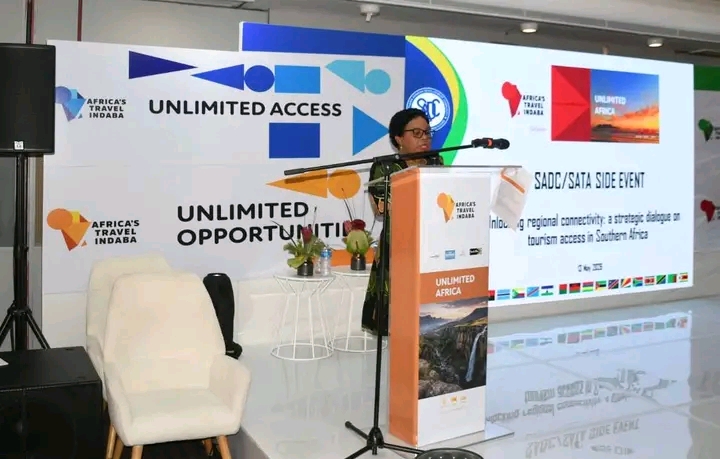
Deputy Minister Maggie Sotyu opened the SADC session at ATI, focusing on unlocking regional tourism connectivity.
Discussions highlighted air and road access, the SADC UniVisa, border post improvements, Transfrontier Conservation Areas.
Note: This session is part of a broader push to position SADC countries as a unified, attractive destination for global travelers.
BY LUCKY SEANEGO